Skip to content
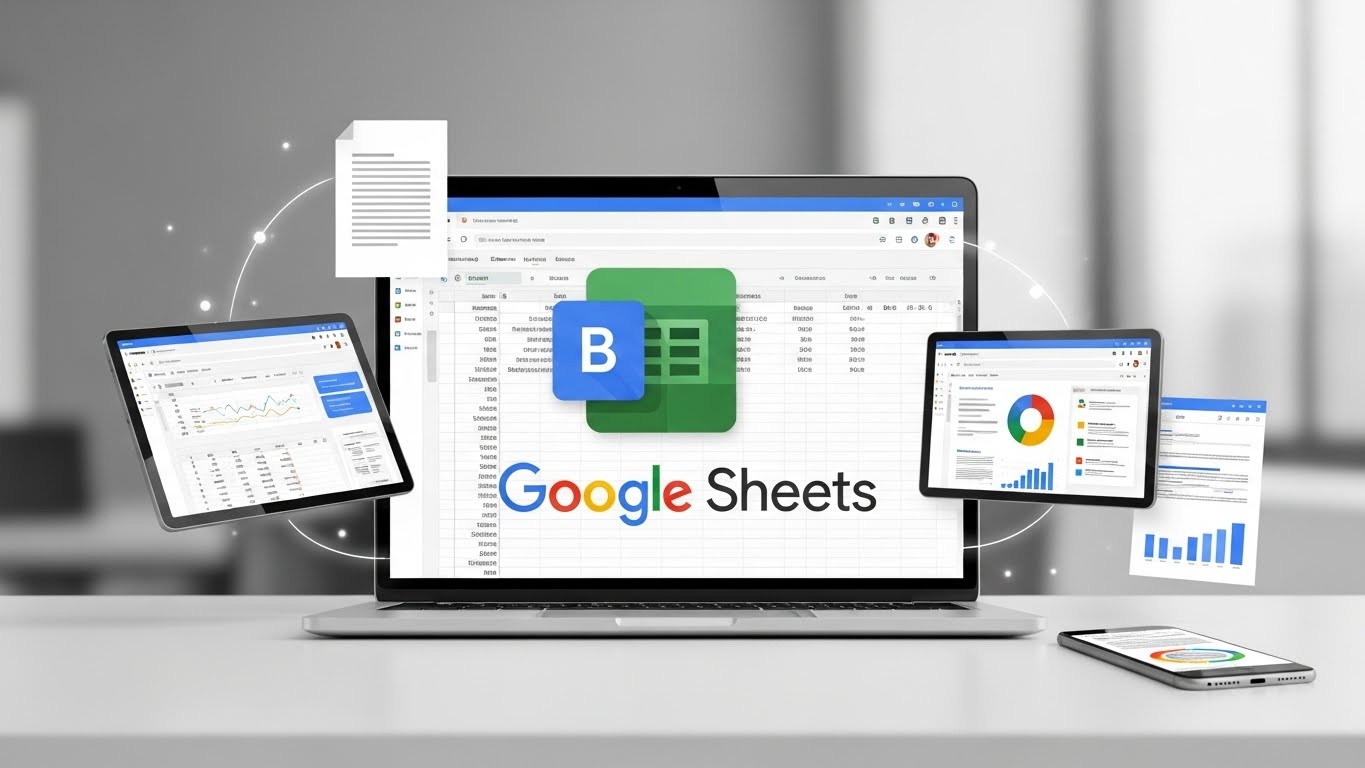
Google Sheets has become one of the most trusted spreadsheet tools in the modern workplace. It’s fast, cloud-based, and built for collaboration. Whether you’re tracking budgets, analyzing sales, managing project timelines, or building dashboards, Google Sheets lets you create powerful spreadsheets that you can access anywhere and share instantly. Because it runs in the browser and syncs automatically, it removes the old headaches of lost files, mismatched versions, and “who has the latest copy?” confusion. ecokeys.co.uk
This comprehensive guide will walk you through what Google Sheets is, how it works, and which features you should master to manage and analyze data like a pro. You’ll also learn essential formulas, organization tips, and advanced functions that help you work faster and smarter.
What Is Google Sheets?
Google Sheets is a cloud-based spreadsheet application developed by Google as part of the Google Workspace ecosystem. It allows users to create, edit, and share spreadsheets online, without needing to install software. You can store data, structure it into tables, calculate results using formulas, and build charts to visualize insights. ecokeys.co.uk
A key strength is compatibility. Google Sheets opens and edits Excel files smoothly, making it easy to collaborate even if some teammates prefer Microsoft Excel. ecokeys.co.uk
Why Google Sheets Is So Popular Today
Google Sheets isn’t just “Excel in a browser.” It brings several advantages that make it a first-choice tool for individuals and teams:
- Online access everywhere: Use it on desktop, tablet, or phone.
- Automatic saving: Your work is stored instantly in the cloud.
- Real-time collaboration: Multiple people can edit the same file at once.
- Simple sharing controls: Decide who can view, comment, or edit.
- Free to start: A solid feature set is available at no cost. ecokeys.co.uk
These benefits make it ideal for remote teams, students, startups, and anyone who works across devices.
Getting Started: How to Create a New Spreadsheet
Creating a fresh sheet takes just a few clicks:
- Open Google Sheets.
- Click File → New → Spreadsheet.
- Start entering your data. ecokeys.co.uk
If you already have a spreadsheet in Excel, you can import it directly into Sheets. That makes switching platforms painless. ecokeys.co.uk
Understanding the Google Sheets Toolbar
The toolbar is your control center. It gives quick access to:
- formatting (fonts, size, color, borders)
- alignment
- number styles
- chart tools
- filter options
- insert menus
Learning the toolbar icons early helps you work faster because you won’t need to dig through menus every time you want to format or organize data. ecokeys.co.uk
Sharing and Protecting Data in Google Sheets
One of the biggest reasons Sheets stands out is its sharing system. Every file is private by default, but you can invite others and set clear access levels. ecokeys.co.uk
How to Share a Google Sheet
- Click Share (top-right corner).
- Enter the email address of your collaborator.
- Choose their permission level:
- Viewer (read only)
- Commenter
- Editor
- Viewer (read only)
- Use advanced settings if you need extra restrictions. ecokeys.co.uk
How to Protect a Sheet or Range
If others can edit your file but certain parts must stay locked:
- Click Data → Protected sheets and ranges.
- Select the sheet or specific range.
- Set permissions, and choose who can edit.
- Optionally show a warning message to prevent accidental edits. ecokeys.co.uk
This is perfect for shared reporting templates, dashboards, or classroom assignments.
How to Organize Data Efficiently
As datasets grow, finding the right information becomes harder. Sheets solves this through filters and clean structure. ecokeys.co.uk
Filters Make Large Data Easy to Navigate
Filters let you display only the rows that match your conditions. For example, you can filter:
- sales by year
- tasks by status
- inventory by availability
Instead of scrolling through hundreds of lines, filtering pulls the important slice into view instantly. ecokeys.co.uk
Hiding Rows and Columns
When you want a cleaner view (especially for sharing), you can hide clutter:
- Right-click a row or column
- Select Hide row or Hide column ecokeys.co.uk
Hidden data stays in the sheet, but won’t distract viewers.
10 Essential Google Sheets Formulas You Must Know
Formulas are where Sheets becomes powerful. Here are ten must-learn functions for daily data work. ecokeys.co.uk
1. SUM
Adds numbers in a range.
=SUM(range)
2. AVERAGE
Finds the average of values.
=AVERAGE(range)
3. FILTER
Returns filtered results that match conditions.
=FILTER(range, condition1, [condition2])
4. FIND
Locates the starting position of text inside a string (case-sensitive).
=FIND(search_for, text_to_search, [starting_at])
5. COUNTIF
Counts cells that match a rule.
=COUNTIF(range, criteria)
6. CONCATENATE
Combines text from multiple cells.
=CONCATENATE(value1, ” “, value2)
7. VLOOKUP
Searches down a first column to return a matching value.
=VLOOKUP(search_key, range, index, [is_sorted])
8. SPLIT
Splits text into columns using a delimiter.
=SPLIT(text, delimiter)
9. SUBSTITUTE
Replaces old text with new text inside a string.
=SUBSTITUTE(text, search_for, replace_with, [occurrence_number])
10. PROPER
Capitalizes each word in a cell.
=PROPER(text)
These formulas cover most common spreadsheet needs, from cleaning text to analyzing numeric patterns. ecokeys.co.uk
Google Sheets Functions and Skills to Level Up
Beyond basics, Sheets offers a huge formula library. Use the formula search box to find specialized tools for:
- date and time calculations
- financial modeling
- advanced conditional logic
- array-based workflows
- data cleansing
The more formulas you learn, the less manual work you’ll ever do.
How to Create a Pivot Table in Google Sheets
Pivot tables are the fastest way to summarize large datasets. Here’s how to build one: ecokeys.co.uk
- Highlight your dataset (make sure each column has a header).
- Go to Data → Pivot table.
- Choose whether to place it in a new sheet or current sheet.
- In the Pivot editor, add fields to:
- Rows
- Columns
- Values
- Filters
- Rows
- Adjust sorting and summarizing to match your insights.
Pivot tables are ideal for reports like totals by region, averages by category, or performance by month.
Best Use Cases for Google Sheets
Google Sheets adapts to countless real-world tasks. Common high-value uses include:
- budgeting and finance tracking
- sales pipelines and performance dashboards
- inventory management
- project planning with timelines
- survey analysis
- school assignments and research data ecokeys.co.uk
If your information can be placed into rows and columns, Sheets can almost certainly organize and analyze it.
Conclusion: Why Google Sheets Is Worth Mastering
Google Sheets is a flexible and powerful spreadsheet platform that combines easy sharing, real-time teamwork, strong data tools, and built-in formulas. From simple lists to advanced dashboards, it helps you manage information efficiently and uncover insights faster. With its cloud-first design and cross-platform access, it’s one of the most useful productivity tools you can learn today. ecokeys.co.uk
Master the toolbar, use filters to stay organized, learn the essential formulas above, and explore pivot tables for deeper analysis—then Google Sheets becomes more than a spreadsheet. It becomes your everyday data advantage.