Skip to content
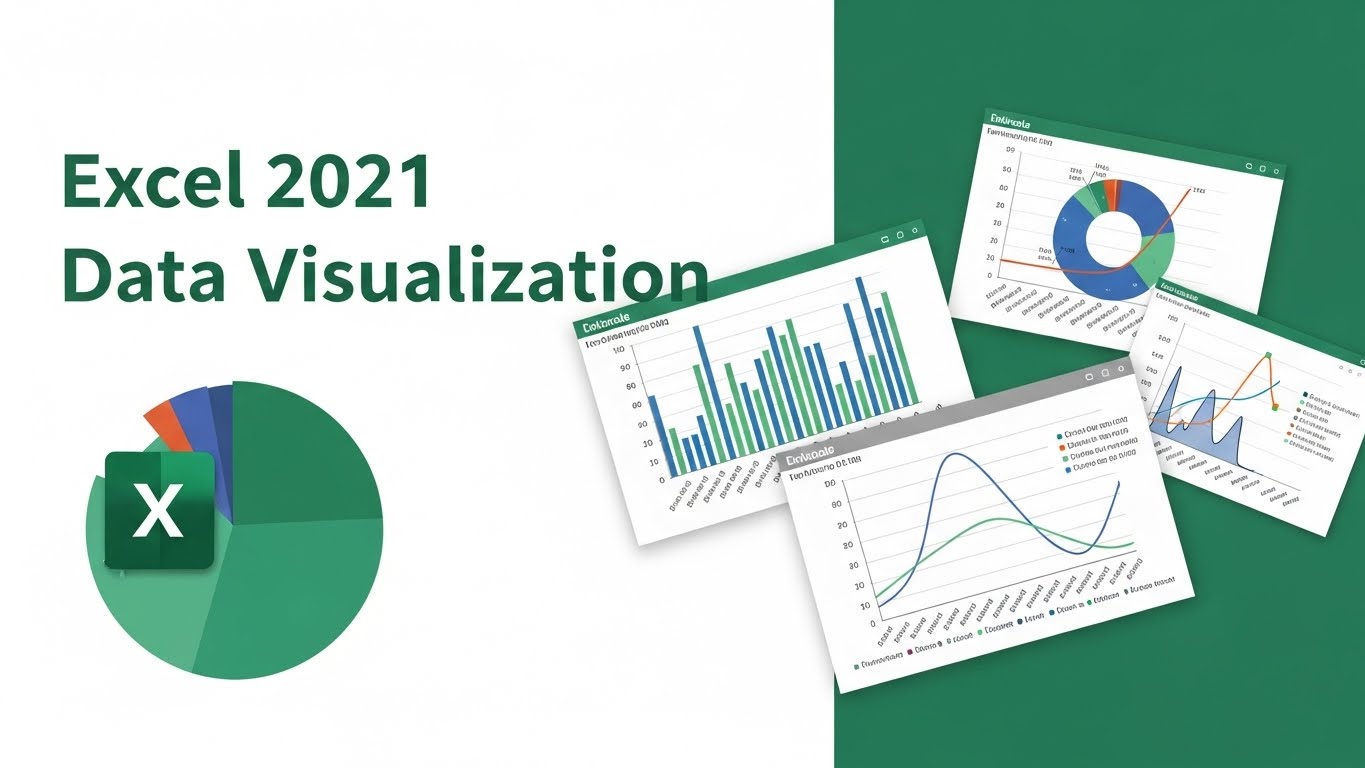
Charts and graphs are the fastest way to make data understandable. A well-built chart can reveal trends, comparisons, and outliers in seconds—things that can take minutes (or hours) to spot in raw tables. Excel 2021 gives you a full toolkit for data visualization, from quick one-click charts to advanced combo visuals and PivotCharts. The key is knowing which chart to use, how to build it correctly, and how to format it so the message is clear. GoSkills.com+2Microsoft Support+2
I couldn’t access the EcoKeys post directly from here, so this rewrite is based on Microsoft’s Excel documentation and current best practices for Excel 2021 charting. Microsoft Support+2Ablebits+2
Let’s dive into a step-by-step, practical guide you can use for any dataset.
Why Charts Matter in Excel 2021
Excel can store thousands of rows, but humans don’t think in rows. We think in patterns. Charts help you:
- Compare categories (sales by product, costs by department)
- Track change over time (monthly revenue, weekly traffic)
- See distribution (test scores, delivery times)
- Show relationships (ad spend vs conversions)
- Communicate faster to clients, managers, or teams GoSkills.com+2Excel Delta | Mastery Made Easy+2
In short, charts turn a spreadsheet into a story.
Step 1: Prepare Your Data for Clean Charts
Great charts start with clean ranges. Before inserting anything:
- Use clear headers. Excel uses the top row and left column for legend/axis labels.
- Remove blanks and merged cells inside your data range.
- Keep data consistent. If one column is currency, all values should be currency.
- Convert to a Table (best practice).
- Select your range → Ctrl + T → check “My table has headers.”
Tables auto-expand when you add new rows, so your chart updates automatically. Microsoft Support+2Labpub+2
- Select your range → Ctrl + T → check “My table has headers.”
If your chart ever “misses” new data, 90% of the time it’s because the range wasn’t structured or dynamic. learn-excel-online.com+1
Step 2: Choose the Right Chart Type (The Smart Shortcut)
Chart type decides clarity. Here’s a quick decision map:
Column / Bar Charts — best for comparing categories
Use when you want to compare values across items.
Examples: sales by region, expenses by team. ExcelMojo+1
Line Charts — best for trends over time
Use for continuous timelines: days, months, years.
Examples: revenue growth, temperature change. ExcelMojo+1
Pie / Doughnut — best for simple parts of a whole
Only use when you have few categories (2–5 max).
Examples: market share, budget split. ExcelMojo+1
Area Charts — best for cumulative trends
Good for showing totals building up over time.
Examples: total subscribers over months. ExcelMojo
Scatter / Bubble — best for relationships and correlation
Shows how two variables move together.
Examples: price vs demand, hours studied vs grade. ExcelMojo+1
Histogram — best for distributions
Shows frequency of values in buckets.
Examples: delivery times, age ranges. ExcelMojo
Combo Charts — best for mixed comparisons
Combine bar + line to show two scales clearly.
Examples: revenue (bars) vs profit margin (line). ExcelDemy
The rule: match the chart to the question you want to answer. Not the other way around.
Step 3: Create Your First Chart in Excel 2021
Excel 2021 makes chart creation simple:
- Highlight your data (including headers).
- Go to Insert tab.
- Choose a chart group (Column, Line, Pie, etc.).
- Click the style you want. Microsoft Support+1
Excel inserts the chart instantly, with automatic labels and legend.
Quick Chart Tip
If you’re not sure which chart fits best, click Insert → Recommended Charts. Excel suggests chart types based on your data shape. Microsoft Support
Step 4: Customize the Chart for Clarity (Not Decoration)
A chart is only useful if it’s readable. Excel 2021 gives you Chart Design and Format tabs when you select a chart.
Add or edit chart titles
- Click the title box → type a clear message
- Optional: link title to a cell so it updates automatically. Ablebits+1
Improve axes
- Right-click axis → Format Axis
- Set sensible bounds (don’t exaggerate trends with tiny ranges).
- Add axis titles if the meaning isn’t obvious. Ablebits
Use data labels sparingly
Data labels help when precise values matter, but too many labels create clutter. Add only where necessary. Ablebits+1
Keep legends simple
If a legend doesn’t add new clarity, remove it. Often, direct labels or a clean title do more. Ablebits
Your goal is communication, not decoration.
Step 5: Use Chart Styles and Colors Like a Pro
Excel 2021 includes built-in styles that instantly modernize charts:
- Select chart → Chart Design → Styles
- Pick clean, high-contrast options (avoid neon gradients). Microsoft Support+1
Best-practice color rules
- Use one main color for most data.
- Use an accent color only to highlight the key point.
- Avoid rainbow palettes unless data truly needs many categories. ExcelDemy+1
This keeps attention where you want it.
Step 6: Create Dynamic Charts That Update Automatically
Nothing kills confidence like a chart that doesn’t reflect fresh data.
The simplest fix: Excel Tables
When your data is a Table, charts expand automatically when you add rows/columns. Labpub+1
Another powerful option: Named ranges
Use Formulas → Name Manager to define dynamic ranges for charts, especially in complex dashboards. learn-excel-online.com
Dynamic charts save time and prevent reporting errors.
Step 7: Visualize Big Data with PivotCharts
If you’re working with thousands of rows, don’t chart raw data directly. Use a PivotTable, then turn it into a PivotChart:
- Select data → Insert → PivotTable
- Build your PivotTable summary
- Click inside PivotTable → PivotTable Analyze → PivotChart Labpub+1
Why PivotCharts are a productivity boost
- They summarize huge datasets instantly
- You can filter with slicers
- They’re perfect for dashboards and monthly reports Labpub+1
Step 8: Add Trendlines and Forecasts
Trendlines help explain where data is heading.
- Click chart → right-click a data series
- Choose Add Trendline
- Pick linear, exponential, moving average, etc. Microsoft Support
You can also show the trendline equation and R² value for analytical reporting.
Step 9: Fix Common Chart Problems Fast
Problem: Chart not updating
Cause: range doesn’t include new rows.
Fix: convert data to a Table or expand range via Select Data. learn-excel-online.com+1
Problem: Chart looks confusing
Cause: wrong chart type or too many series.
Fix: Chart Design → Change Chart Type. Simplify series. learn-excel-online.com+1
Problem: Labels overlap
Fix: reduce labels, rotate axis text, or widen chart. Ablebits
Problem: Too much data
Fix: filter data, group categories, or use a PivotChart. Labpub+1
Step 10: Excel 2021 Charting Best Practices (For Real-World Impact)
- Start with the question. “What do I want the viewer to learn?”
- Use the simplest chart that answers it.
- Avoid 3D charts unless absolutely necessary. They distort perception. ExcelMojo+1
- Keep grids light. Too many gridlines distract.
- Label what matters most. Not everything.
- Build reusable templates. Save a polished chart as a template for future reports. ExcelDemy
- Make charts accessible. Use clear contrast and readable fonts. Add alt text for shared files. learn-excel-online.com+1
When you follow these rules, your charts don’t just look better—they persuade better.
Final Thoughts: Make Excel Charts Your Competitive Advantage
Excel 2021 charts and graphs aren’t just “nice visuals.” They’re decision tools. When you pick the right chart type, structure your data cleanly, and format for clarity, you transform spreadsheets into insights that people understand instantly.
Whether you’re building a business report, school project, KPI dashboard, or client presentation, Excel 2021 data visualization skills make your work faster, smarter, and more credible. Start simple—column charts, line charts, clean labels—then level up to combo charts and PivotCharts as your datasets grow.